In April 2026, the Center on Philanthropy published Generative AI Use among Nonprofit Professionals in Korea, based on a survey of 302 respondents. A total of 106 people from 53 organizations took part in pairs of one leader and one staff member. The Center on Philanthropy at The Beautiful Foundation advised on the program’s design and then observed the training on site to study its effectiveness.
How Kakao and the Center on Philanthropy came together
In April 2026, the Center on Philanthropy surveyed 302 nonprofit professionals for its study Generative AI Use among Nonprofit Professionals in Korea. Individual use stood at 93%, close to saturation. Yet only 27% of organizations had formally adopted AI. The survey grouped respondents into four types. The most common was not the “strategic” type, who use AI strategically with organizational support. It was the “experimental” type, who figure things out on their own without organizational support. Individual practitioners’ skills and openness were determining how well AI was used. Organizations were not yet playing a supporting role.
In July, Kakao visited the Center. Kakao was preparing an AI training program for nonprofit practitioners. We talked about what kind of training the field needed and what the survey findings revealed.
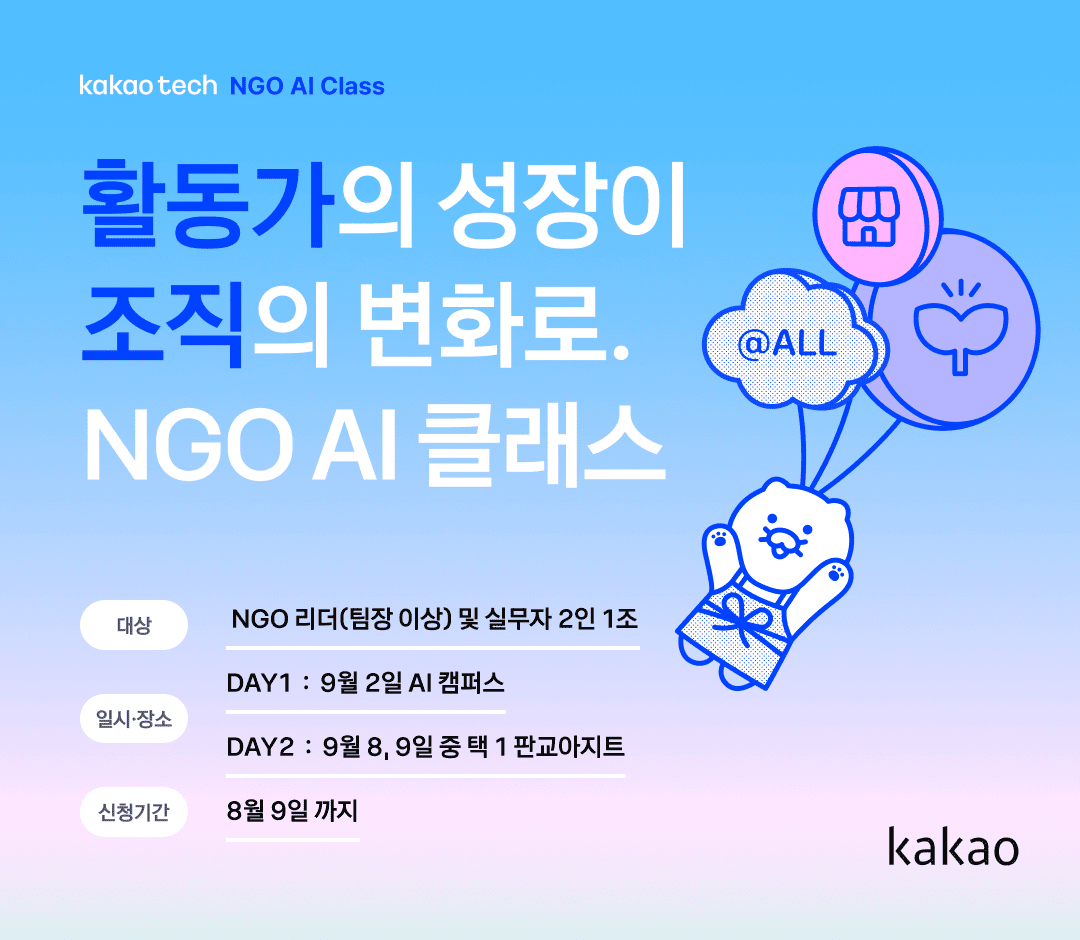
NGO AI Class Poster. Source: Kakao
Leaders and staff learning together: the paired design
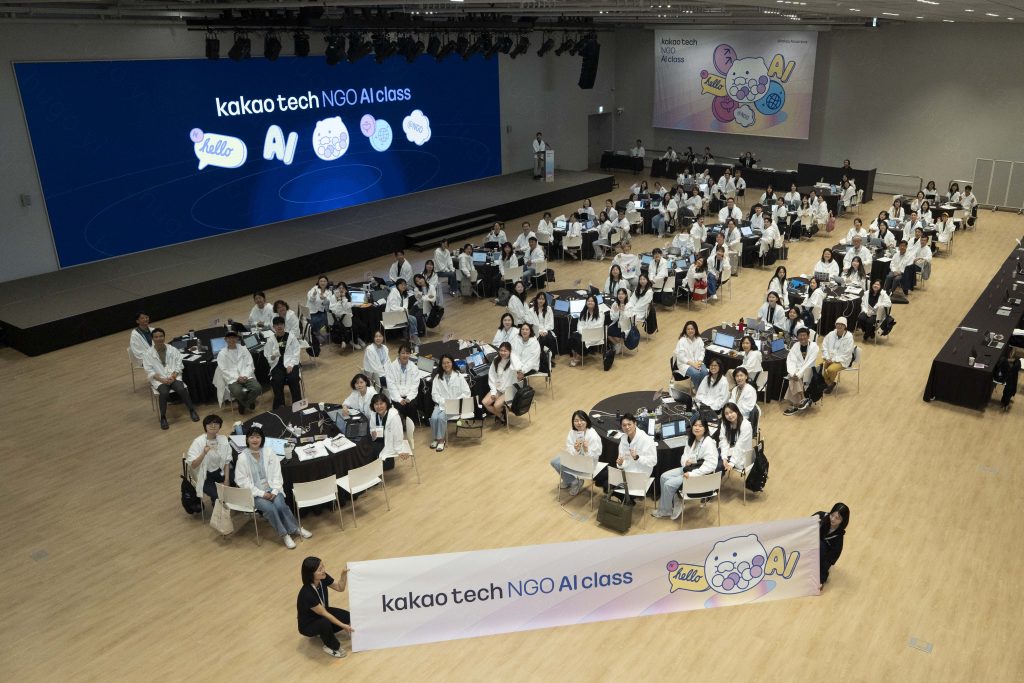
The program’s most distinctive feature was how people took part. A leader and a staff member from the same organization attended together. The slogan on site was “From practitioners’ growth to organizational change.” This design reflects the Center’s survey findings. Concerns about security risks and skill gaps appeared regardless of individuals’ level of AI use. In other words, using AI more does not free people from these concerns. The issue was not individual skill, but organizational readiness. Can an individual staff member’s learning become the organization’s capacity? If leaders learn alongside them, can decisions on adoption and internal guidelines come faster? The program was also a chance to test these hypotheses in the field.
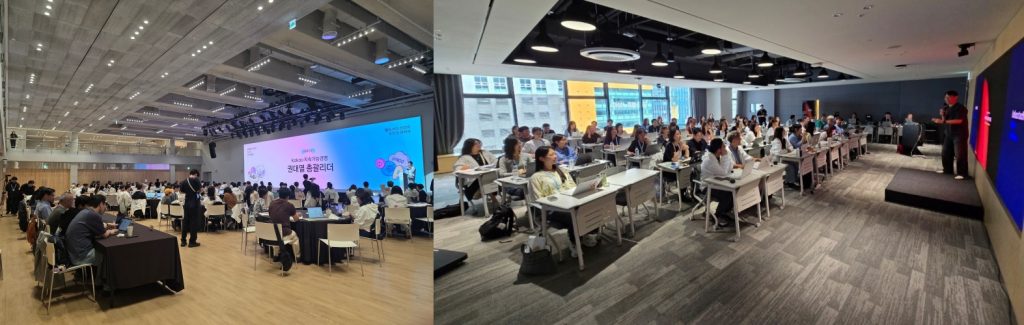
Left: Day 1 at Kakao AI Campus. Right: Day 2 at Kakao Pangyo Agit. Source: Kakao
Building an AI agent right away
I have taken AI training about twice before. In 2024, “AI for Research” was taught as part of research methodology. I was introduced to AI tools useful for researchers and learned how to use them. In 2025, I took a course on work efficiency. It covered automating meeting recordings and notes, writing prompts, and using design tools. The goal was to cut the time spent writing documents and to streamline related tasks such as slides and design work.
But in less than six months, the content of AI training had completely changed. From the very first day, participants built AI agents to handle their own work. It did not stop at setting up a single assistant for recurring report drafts or issue monitoring. Participants could group several assistants by role and run them like a “department.”
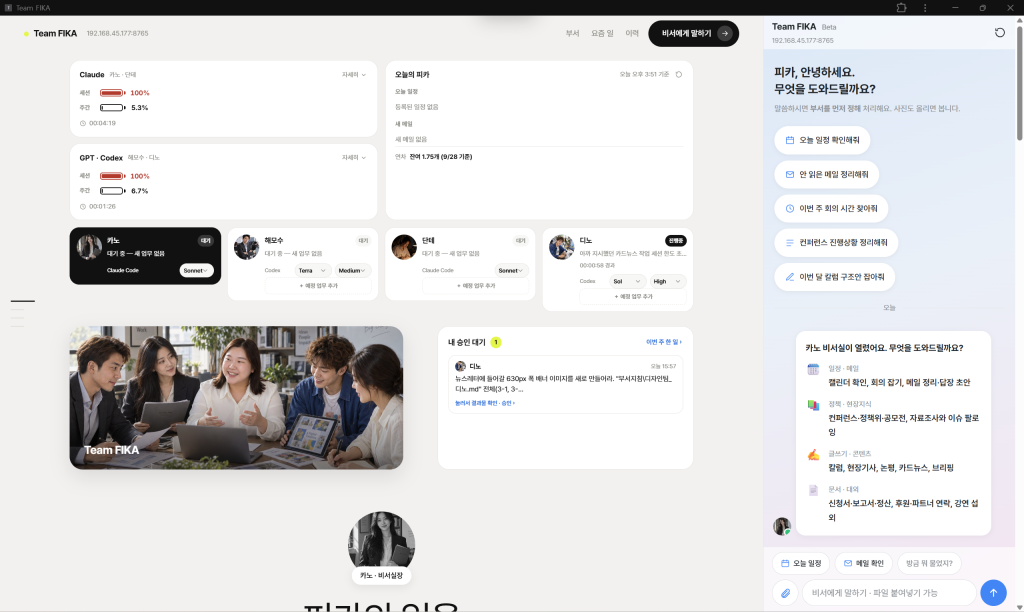
Team FIKA, an AI agent assistant office built by a participant. Left: the dashboard. Right: a dedicated chat window for the assistants. The dashboard shows AI engine usage, schedules, new email alerts, and each assistant’s tasks at a glance. (Source: Hee Sun PARK, Simin)
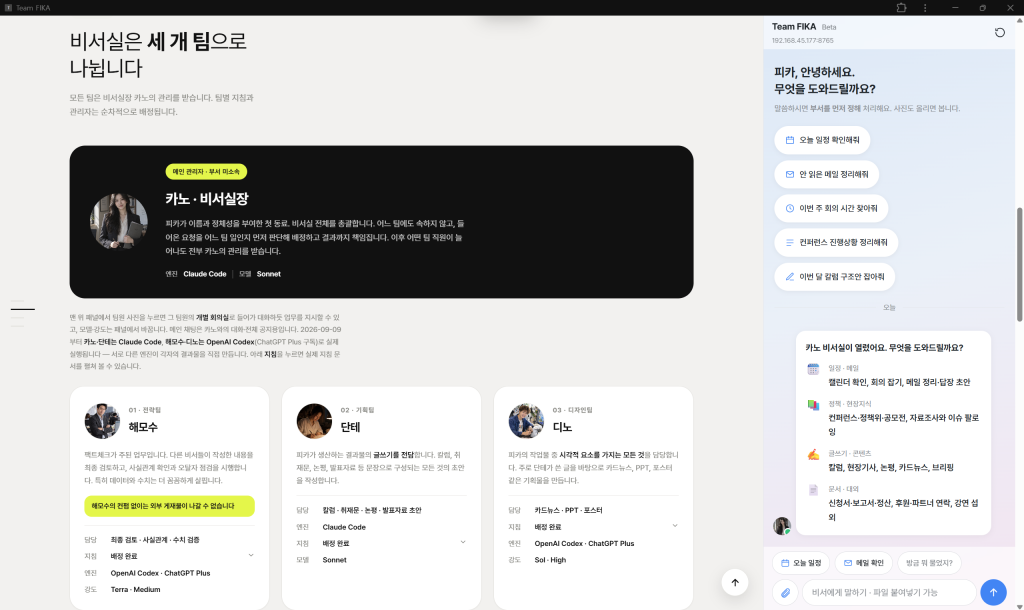
When the assistants finish a task, it automatically appears on the “Awaiting My Approval” board. Users can see right away what each assistant is working on and how long it is taking. (Courtesy of Hee Sun PARK, Simin)
Two years ago, training meant learning a single tool. This time, it meant designing an entire organization. With expert, energetic lectures and one-on-one help from specialists, participants completed the whole process of building their own agents. For the next month, they can continue building what they need, individually or as an organization, with help from Kakao Fellows in a group chat.

The results of the two-day program looked powerful on site. Will they lead to change at the organizational level? The Center on Philanthropy plans to find out through pre- and post-surveys comparing participants and organizations before and after the training, as well as interviews with participants.
Source: Kakao
Written by: Sam Jang
Translated by: Minjung Chung